How to Choose a PCB Assembly Partner in India: A Practical Checklist
Price matters, but it rarely makes or breaks an EMS relationship. What to check before you choose a PCB assembly partner in India.
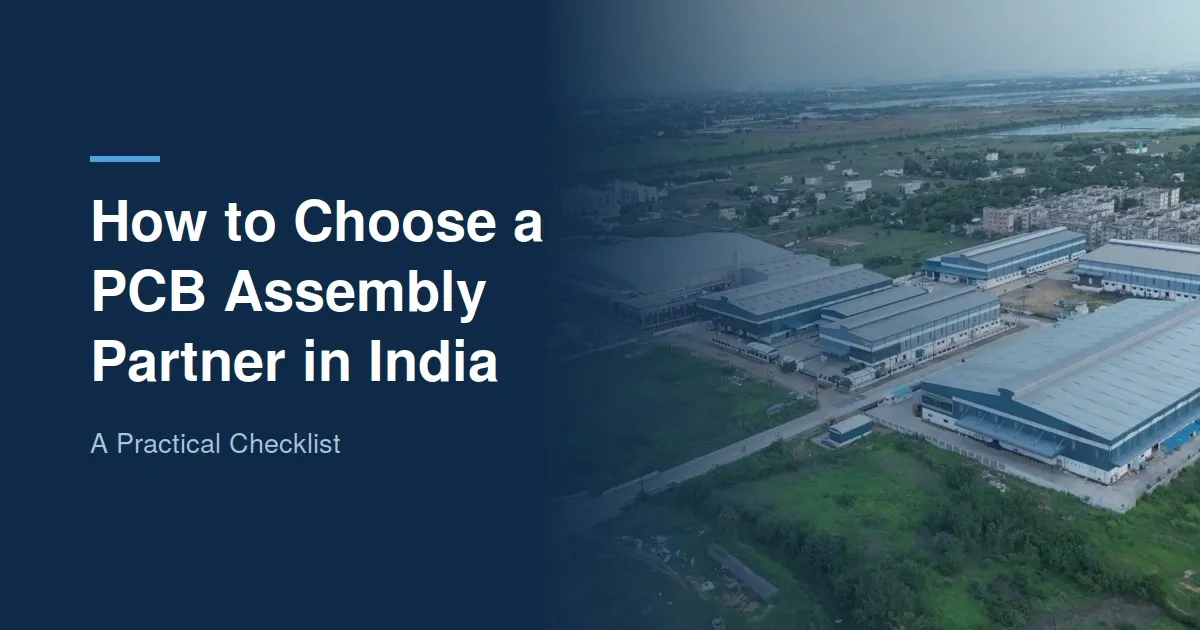
India has become a serious place to build electronics. A growing domestic market, government incentive schemes such as the Production Linked Incentive (PLI) programmes, and global buyers looking to diversify their supply chains have all pushed EMS capacity up. That also means more choice, and more variation in quality. The lowest quote is rarely what decides whether a partnership works.
Here is the checklist we would use if we were on your side of the table.
1. Do they build boards like yours?
Ask what they build every day, not what they could build. Relevant questions:
- SMT, through-hole and mixed-technology assembly?
- The smallest and largest packages they place routinely (0201? 0.4 mm pitch? large BGAs?)
- Board sizes, layer counts and finishes they handle;
- Volumes they are set up for, from prototypes to production.
Ask for examples, ideally in your industry.
2. Is quality a system or a slogan?
Look for:
- workmanship to IPC-A-610 and inspectors trained to it, with the class agreed for your product;
- a documented quality management system, with audit reports you can see;
- ESD control you can see on the floor, not just on a poster;
- MSL handling for moisture-sensitive parts;
- a controlled environment for fine-pitch work.
Our article on quality control in EMS explains what each of these means.
3. How do they inspect and test?
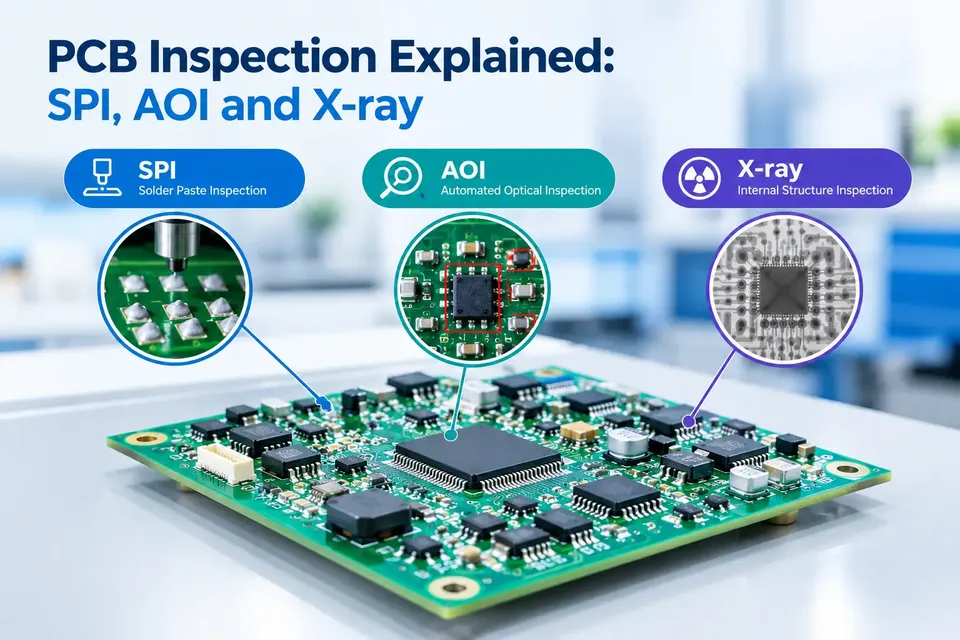
Ask exactly which checks every board goes through. A strong answer covers solder paste inspection, automated optical inspection, a clear plan for any hidden joints such as BGAs (X-ray, in-house or through a partner), and functional testing. See SPI, AOI and X-ray and ICT vs functional testing.
4. Can they source parts reliably?
For turnkey work, component sourcing is where most delays come from. Ask:
- Do they buy from authorised distributors and manufacturers?
- How do they handle shortages and propose alternates?
- Do they inspect incoming parts and guard against counterfeits?
- Who owns excess stock at the end of a run?
More on this in component sourcing and supply chain.
5. Will they tell you about problems early?
The best partners raise manufacturability and sourcing risks before they become delays, and share yields and inspection data. Ask how they give design feedback, and for an example.
6. Can they grow with you?
A partner who can build your 20 prototypes and your 20,000-piece production run, and add box build, coating and testing later, saves you a painful supplier change in the middle of a product launch.
7. Practicalities
Location and logistics matter too: proximity to ports and airports, time to reach the factory for a visit, and response time on email and calls. Ask who your single point of contact will be.
The scorecard
Area | What good looks like |
|---|---|
Capabilities | Builds boards like yours every week; examples available |
Quality system | IPC-A-610, documented QMS, visible ESD and MSL control |
Inspection and test | SPI, AOI, a plan for hidden joints, functional test |
Sourcing | Authorised channels, alternates process, counterfeit checks |
Engineering | Manufacturability feedback before the build |
Scalability | Prototype to production volumes, box build available |
Communication | One contact, fast answers, data shared openly |
Visit if you can
A short walk through the factory says a lot: are ESD rules followed, are reels labelled and tracked, how are failed boards handled, is the floor clean? Ask to see a board being inspected and what happens when it fails.
Polyfit's EMS division, Chennai
Polyfit has decades of manufacturing behind it and is an A-Level SQ certified company. Its EMS division runs a fully automated SMT line in a Class 10K (ISO 7) cleanroom in Chennai, with SPI, AOI, functional testing, conformal coating, box build and component sourcing, built to IPC-A-610. Get in touch or request a quote.
From precision components to custom manufacturing, Polyfit delivers solutions tailored to your application and specifications.
Request a quote